
Call Us USA/CANADA (011 30) EUROPE(00 30) AUSTRALIA (0011 30)Mobile: 697 305 7711
GREECE PRIVATE TRAVEL TOURS & TRANSFERS


Private Tour in Corinth - Half / Full day
Private Half/ Full day tour to Corinth
Private tour in Corinth, Corinth Canal. Half/ Full day tour to Ancient Corinth, Akrocorinth, Isthmus... Ancient Corinth was a destination in Apostle Paul route in Greece...
CORINTH PRIVATE DAY TOUR
Ancient Corinth/ Akrocorinth/ Canal ( Half day 5 hours/ Full day up to 9 hours)
Corinth Tour half day (max 5 hours includes: Ancient Corinth & Acropolis/Acrocorinth Castle)
or Corinth full day ( max 9 hours includes: Ancient Corinth, Acropolis/Acrocorinth Castle, Loutraki & Perachora / Hera's Temple).
Corinth Private Tour starts from Athens, your hotel/ apartment or Piraeus port (request another terminal).
Our Comment: Even people who are not particularly interested in the history of the numerous ancient temples will certainly enjoy a morning tour or afternoon tour to Ancient Corinth. Only to admire the stunning sight of the sun caressing the marble ruins of the Temple of Apollo with its last golden rays, just before setting in the waters of the Corinthian Gulf or have a swim in its crystal waters by Hera's Temple in Perachora or Loutraki at the end of the Corinthian Gulf.
Starting from Athens we drive westward along the scenic coast of the Saronic Gulf through the ancient areas of Elefsis and Megara where the Battle of Salamis took place in 480 B. C . The Persians had overrun Athens and Attica and assembled their fleet in the Bay of Phaleron while the Greek trieres had withdrawn into the Bay of Elefsis. Soon Greece private tour will reach the Corinth canal with its breathtaking views (short stop / on the bridge, which is the highest point of the canal)
The Isthmus of Corinth is cut by the Corinth Canal, constructed between 1882 and 1893. Involving an excavation of up to 80 m (262 ft) in depth , the canal is 6,3km (4 miles) long, 23m (75 ft) wide and 8m (26 ft) deep , and can take ships of up to 10,000 tons. The ancient Greeks also sought to cut a channel through the Isthmus to avoid ships having to circumnavigate the Peloponnese or be hauled over the Diolkos. Both Periander and Alexander the Great had considered the question but it was Nero who inaugurated the digging in AD 67 with a golden shovel: 6.000 prisoners were employed on the work. the site was abandoned after about 3 or 4 months when Nero returned to Rome. The canal was begun in 1882 by a French company, the Society International du Canal Maritime de Corinth, inspired by a proposal made in 1829 by Virlet d' Aoust, a member of the Morean Commission. Work stopped in 1889 when the company went bankrupt but the canal was competed by the Greeks in 1893. The best view of the canal is from the bridge which carries the road over it.


Shortly after, Corinth private tour arrives at the Ancient town of Corinth (visit). Back in ancient times Corinth was one of the three major powers in Greece, and took part in all the battles against the Persians. It was from one of the richest cities and this is quite evident by its remains, including the huge Agora (market place) and Apollo's Temple (6th c . B .C.)


Ancient Corinth Tour. The archaeological site is dominated by the Archaic temple of Apollo (photo), built on a rocky hill. It is a Doric peripteral temple with monolithic columns (6x15). First the Naos Oktavias: a Roman building from which three Corinthian capitals found. Left the Museum: The collections consist of most of the pieces produced by the excavations. Naos Iras: an old sanctuary to Hera, to reach the adjoining Glafki Krini: fountain Glauke, cut into the natural rock.
Agora sanctuaries and temples, fountains and public buildings, flanked by a series of shops and stoas. In the middle of a row of shops which stood along the south edge of the agora's central section, is the bema (tribunal) from which Apostle Paul spoke to the Corinthians in AD 52.

In Corinth Paul developed friendship with Akylas and Priscilla who were also tend-makers (as he also was) and already knew some things about Jesus. He stayed and worked with them and every Saturday he preached Jews and Greeks. Most of Jews were not convinced that Jesus was the Messiah and at some point Paul stayed with Titus Justus who was proselyte and lived close to the synagogue. Among the believers was Crispus, chief priest of the synagogue who was baptized together with all his family. The Acts of the Apostles inform us that at some point Corinthian Jews united against Paul. They dragged him to court accusing him that he was illegally trying to convert people follow his preaching. Hebrews’ statement had no result as Paul's problem had nothing to do with the hostility of the pagans but of his fellow citizens. Few weeks later he decided to leave Corinth. He had to quickly go to Ephesus. He said goodbye to his friends and he left from Kechries port accompanied by Silas, Timothy, Akylas and Priskilla. Apostle Paul is the patron saint of Corinth and Corinthians built an impressive church in his honor.


Corinth Museum / Greece Private Tours
In the Museum galleries are exhibited:
Finds dated to the Prehistoric Period from the area of Ancient Corinth, the Korakou Hill and the site of Zygouries (Prehistoric Gallery)
Finds from the Geometric, Archaic, Classical and Hellenistic City of Corinth (Classical Gallery - under reconstruction - accessible to the public in 2016)
Finds from the Roman, Byzantine and Frankish City. In this Gallery are also exhibited objects stolen in 1990 from the Museum and delivered back in 2001 (Roman Gallery)
Finds from the Sanctuary of Asklepios and the Early Christian cemetery (Asklepieion Gallery)
A selection of statues, sculpture, Greek and Latin inscriptions, as well as finds related to the presence of the Jewish community in the area can also be seen (Atrium).
A new (East) gallery currently under construction, will be added to the Museum in 2016, hosting finds from the komai (smaller settlements) and the sanctuaries of Corinth, as well as the twin Kouroi found in the cemetery of ancient Tenea.

South Stoa Propilea: only the base of the monumental entrance to the agora remains. In the Roman era it was surmounted by two great gold Chariots belonging to Helios and his son Phaeton. A paved street, the Lechaion way, led from the agora, through Propylaea to the port. Pirini Krini: The Peirene fountain dates from the 6cBC but has been remodeled many times. Odeon: Excavations have revealed a small Roman theatre dating from the AD 1. The banks of seats, most of which are shewn out of the rock, could accommodate about 3000 spectators. Greek Theatre: Begun in the 5c BC it was remodeled several times particularly in the AD 3 when the stage was enlarged to accommodate gladiatorial combats and nautical spectacles. It held about 18000 people


ACROCORINTH CASTLE /GREECE PRIVATE TOURS

Acrocorinth tour: The ascent to Acrocorinth Akrocorinthos, 575m (1887 ft) is facilitated by a road which climbs to a point near the lowest gate on the W side. This commanding site was fortified in ancient times , and its defenses were maintained and developed during the Byzantine, Frankish, Turkish and Venetian periods. After a moat (alt. 380 m -1247 ft) constructed by the Venetians there follow the first gate, built in the Frankish period (14th,c.) and the first wall 15th c. then come the second and third walls (Byzantine: on the the right, in front of the third gate, a Hellenistic tower). Within the fortress we follow a path running NE to the remains of a mosque (16th c.) and then turn South until we join a path leading up to the eastern summit, on which there once stood the famous Temple of Aphrodite, worshiped here after the Eastern fashion (views of the hills of the Peloponnese and of Isthmus).


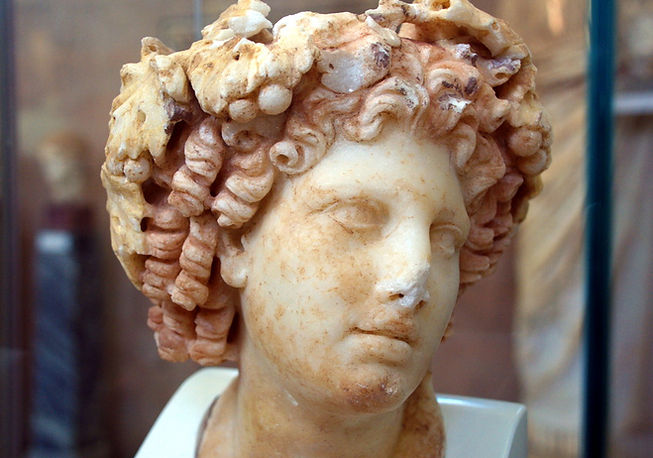
Ancient Corinth Archaeological Museum.
The museum houses a large collection of artifacts of the local archaeological site and smaller sites in the neighboring area, such as Korakou, Gonia, and Acrocorinth. The artifacts, which were systematically recovered beginning in 1896 by the Corinth Excavations, illustrate much about Ancient Corinth through Greek, Roman and Byzantine rule. Exhibits include statues, mosaics, pottery and sarcophagi.
The museum consists of four rooms.
In room one are finds from the prehistoric installations in the area and includes pottery, figurines, and tools. Room two contains objects from the Geometric, Archaic, and Classical periods. Room three houses statues of Roman rulers, floor mosaics, wall paintings and Roman and Byzantine pottery. The Asklepieion room contains mainly votives from the Asklepieion at Ancient Corinth.

PERACHORA- HERA'S TEMPLE /GREECE PRIVATE TOURS
Perachora - Hera's Temple
The Heraion of Perachora is a sanctuary of the goddess Hera situated in a small cove of the Corinthian gulf at the end of the Perachora peninsula. In addition to a temple of Hera of unusual construction and antiquity, the remains of a number of other structures have also been found, including an L-shaped stoa, a large cistern, dining rooms, and a second potential temple. The Sanctuary of Hera at Perachora is 14.2 km (8.8 mi) of Corinth.
Although there is debate between Argos, Megara and Corinth, the sanctuary was probably under the control of Corinth, as it faced the harbors of that powerful city across the Corinthian gulf. Cult activity at the site continued from perhaps the 9th century BCE to 146 BCE, when the Roman general Mummius sacked Corinth during the war with the Achaean League. In the Roman period, domestic structures were built on the site, indicating that the area was no longer a sanctuary. This site is significant for the study of the origins of Greek temple architecture and rural cults.


The Melagavi lighthouse, also known as Heraion lighthouse, was built in 1897 on the Agrilaos peninsula, in the golf of Alkyonides Islands. In 1947, the building was renovated and repaired. Its outline is T shaped, and it has a rectangular light tower. It is made of stone and it constitutes a typical example of classical lighthouse architecture. Melagavi is renowned to be one of the 10 most beautiful lighthouses in Greece and it is also one of the most photographed landmarks by travelers with thousands of captures on Social Media like Instagram and Tumblr.

There is a legend recounted in Euripides that Medea buried her murdered children at a sanctuary of Hera Akraia as she fled from Corinth. This may be a reference to this site. Herodotus tells the story of Periandros stripping the clothes off of the Corinthian women at a sanctuary of Hera.
The Greek historian Stravon wrote in the 1st century CE that there was an oracle associated with the sanctuary.
If the temple was still in use by the 4th-century, it would have been closed during the persecution of pagans in the late Roman Empire, when laws against non-Christian religions and their sanctuaries where enacted by the Christian emperors.


Touring Info
Private tour to Corinth /Daily: Half day up to 5 hours or one day tour up to 9 hours). Please read Touring/Info*
Sites & Museums: Summer: daily, 8.00 to 20.00 pm. Winter: 8.00 to 17.00 Last entry 30 min before closing.Entrance fee to site & Museum 8 Euro. Acrocorinth Acropolis 3 Euro
Closed on Holidays: January 1st. , March 25th, May 1st, Easter Sunday, Christmas Day and Boxing Day. On Good Friday, the sites are open 12.00 - 17.00.


Highlights
Highlights of Corinth Private Tour
-
Scenic Views (Elefsis , Megara, Salamina)
-
Corinth Canal
-
Ancient Corinth
-
Vema: Saint Paul
-
Apollo Temple, Agora
-
Acrocorinth Acropolis & Castle
-
Perachora/ Hera's Temple
-
If your tour is extended, time permits for Lunch and swim in Perachora or Loutraki
From 100 € min. 4 persons

Day tours from Athens
-
Athens & Sounion Combine 2 sites
-
Athens & Corinth Combine 2 sites
-
Argolis Tour (Mycenae - Epidaurus - Nafplion)
-
Wine Tour ( Nemea -Wine Tasting)