
Call Us USA/CANADA (011 30) EUROPE(00 30) AUSTRALIA (0011 30)Mobile: 697 305 7711
GREECE PRIVATE TRAVEL TOURS & TRANSFERS


Epirus Tour / Mountains of Pindos / Ioannina
Epirus Tour includes: Mount Pindos,Zagoria, Vikos Gorge, Ioannina , Dodoni
Tour Epirus Mountains of Pindos , Vikos Gorge, Zagoria Villages... Ioannina & Ancient Dodoni. Epiros Tour
EPIRUS IS AN OPEN MUSEUM
We visit Epirus/ Vikos Gorge/ Ioannina/ Dodoni as travelers, not as tourists
Epirus is a geographical and historical region in southeastern Europe, now shared between Greece and Albania. It lies between the Pindus Mountains and the Ionian Sea, The largest city in Epirus is Ioannina.
A rugged and mountainous region, Epirus was the north-west area of ancient Greece. It was inhabited by the Greek tribes of the Chaonians, Molossians, and Thesprotians, and home to the sanctuary of Dodoni, the oldest ancient Greek oracle dedicated to Zeus, and the most prestigious one after Delphi. Unified into a single state in 370 BC by the Aeacidae dynasty, Epirus achieved fame during the reign of Pyrrous of Epirus, whose campaigns against Rome are the origin of the term "Pyrric victory". Epirus subsequently became part of the Roman Empire along with the rest of Greece in 146 BC, which was followed by the Byzantine Empire.
Following the fall of Constantinople to the Fourth Crusade, Ioannina at Epirus became the center of the Despotate of Epirus, one of the successor states to the Byzantine Empire. Conquered by the Ottoman Empire in the 15th century, Ioannina /Epirus became semi-independent during the rule of Ali Pasha in the early 19th century, but the Ottomans re-asserted their control in 1821. Following the Balkan Wars and World War I, southern Epirus became part of Greece, while northern Epirus became part of the newly created state of Albania.
EPIRUS TOUR - IOANNINA LAKE
The small inhabited Ioannina Island, where Ali Pasha was hiding during the last days of his reign, is situated near the northern shore.
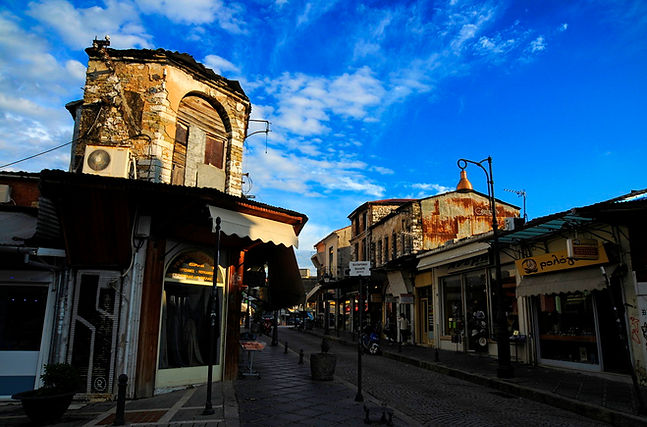
IOANNINA. The city's foundation has traditionally been ascribed to the Byzantine Emperor Justinian in the 6th century AD, but modern archaeological research has uncovered evidence of Hellenistic settlements. Ioannina flourished in the late Byzantine period (13th–15th centuries). It became part of the Despotate of Epirus following the Fourth Crusade. Many wealthy Byzantine families fled there following the sack of Constantinople, and the city experienced great prosperity and considerable autonomy, despite the political turmoils. It surrendered to the Ottomans in 1430. Between 1430 and 1868 the city was the administrative center of the Pashalik of Ioannina/ Yanina. In the period between the 18th and 19th centuries, the city was a major center of the modern Greek Enlightenment. Ioannina was ceded to Greece in 1913 following the Balkan Wars. The city's emblem consists of the portrait of the Byzantine Emperor Justinian crowned by a stylized depiction of the nearby ancient theater of Dodoni.
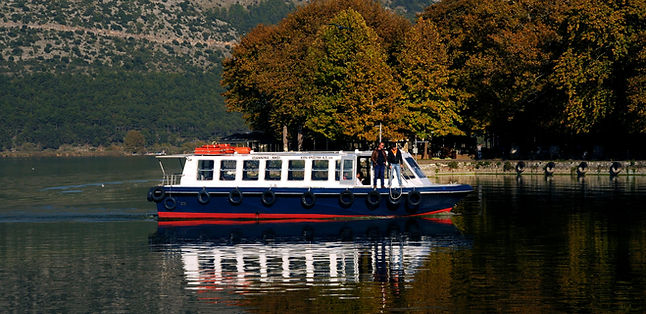
Lake Pamvotis is the largest lake of Epirus, located in the central part of the Ioannina regional unit in northern Greece. The regional capital Ioannina to the west and the town of Perama to the north are urban settlements fringing the lake while the remaining of its periphery is composed of farmland. The lake features small fishing ports and a boating port. There is a regular boat service to the Ioannina Island.


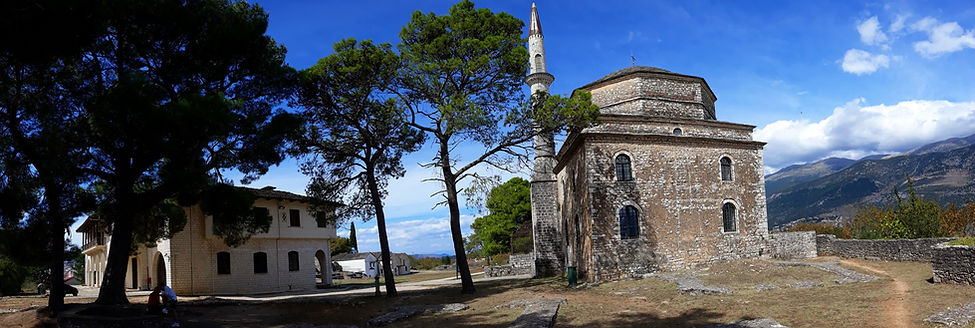
DODONI
in Epirus in northwestern Greece was the oldest Hellenic oracle, possibly dating to the second millennium BC according to Herodotus. The earliest accounts in Homer describe Dodoni as an oracle of Zeus. Situated in a remote region away from the main Greek poleis/ cities states, it was considered second only to the oracle of Delphi in prestige.
Aristotle considered the region around Dodona to have been part of Hellas and the region where the Hellenes/ Graikoi originated.

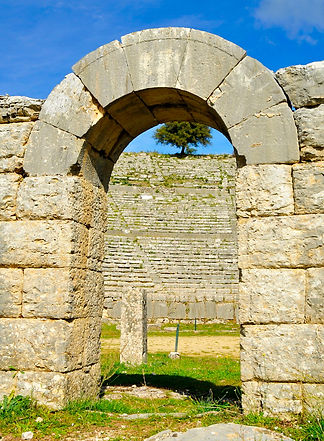
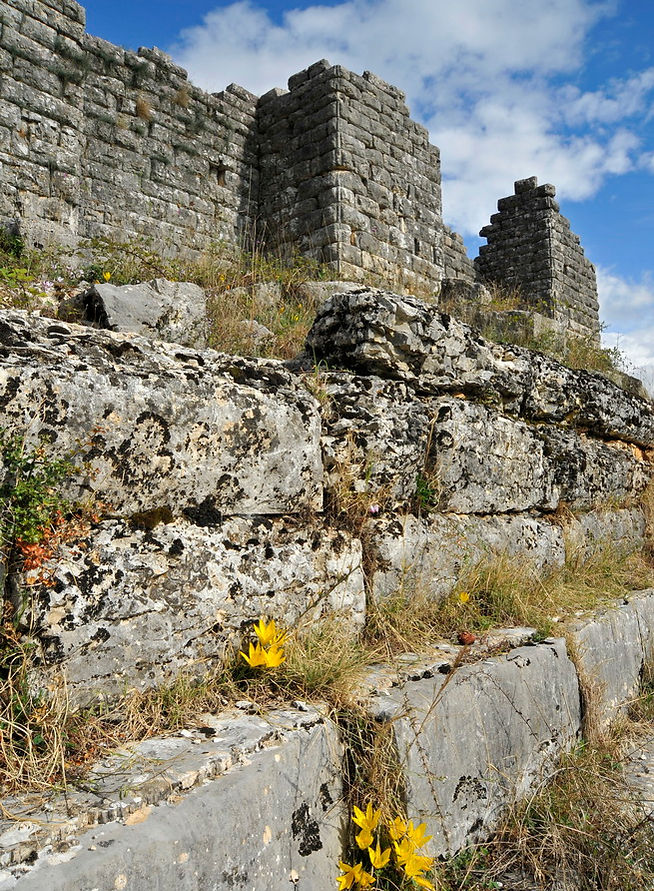
Zeus was worshipped at Dodona as "Zeus Naios" and as "Zeus Bouleus" According to Plutarch, the worship of Jupiter (Zeus) at Dodona was set up by Deucalion and Pyrrha.

EPIRUS TOUR - DODONI ORACLE
Though it never eclipsed the Oracle of Apollo at Delphi, DodonI gained a reputation far beyond Greece. In the Argonautica of Apollonius of Rhodes, a retelling of an older story of Jason and the Argonauts, Jason's ship, the "Argo", had the gift of prophecy, because it contained an oak timber spirited from DodonI.


EPIRUS - METSOVO:
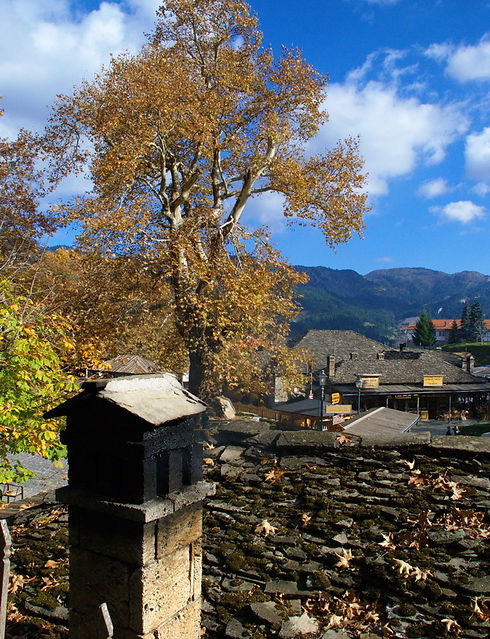
Five reasons to visit this mountain traditional village: Proud, distinguished, with a rich folk tradition, this charming town of Epirus provides plenty of reasons for visiting it again & again
THE NATURE
Built at an altitude of 1200 m right at the heart of Pindos and surrounded by dense forests, it is the starting point of unforgettable scenic views into nature. Hikers love its trails - one of which is the famous Ursa Trail (trail of the bear), which recently won the Leading Quality Trail - Best of Europe certificate.
THE DISTINGUISHED PAST AND PRESENT
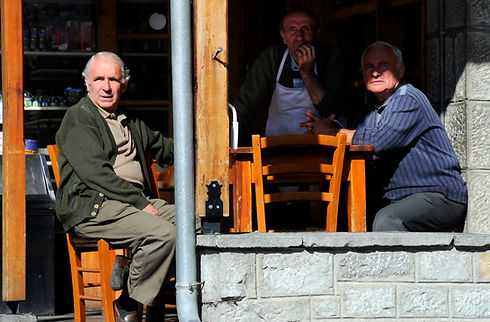
The inhabitants of Metsovo are known for their industriousness and patriotism. In previous centuries, many merchants made their fortunes abroad and made generous charitable donations to the whole of Greece. Today the visitors can admire the mansions made of stone, the old churches, monasteries with the wood-carved iconostases and about 25 traditional water fountains. One can also visit the Averoff Art Gallery, a true ark of modern Greek ART with more than 200 works by the most significant Greek painters and sculptors.
THE LIVING FOLK TRADITION
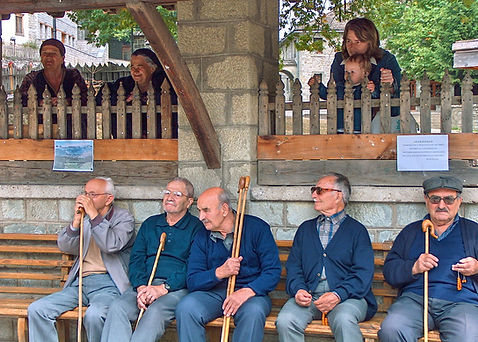
Situated at the point where Epirus meets Thessaly and Macedonia, it is endowed with a very distinct folk tradition. Even today, we see elders in the streets proudly wearing local outfits and hear them speak the Old Vlach language. The folk craftsmen of Metsovo are famous for their wood carvings and hand woven textiles that can purchased from the town's shops. The Folklore museum of Tositsa, is also of great interest.
THE CHEESES AND WINES
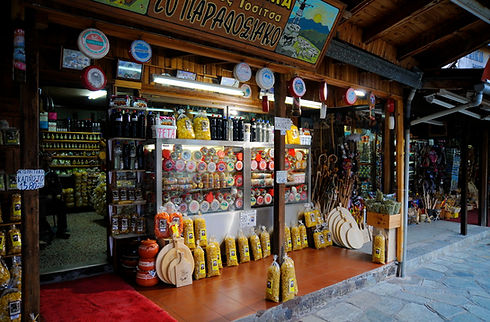
The Metsovo region produces some of Greece's tastoets cheeses, including the metsovela, the batzisio and the most famous of them all, the metsovone. The latter matur for at least 3 months and has a very characterisitic salty and spicy flavour, which seems to capture all the aromas of Pindos. It is simply irresistible!. They also have a long tradition in wine making. The regions wine is produced in one of the most mountainous vineyards in Europe.
THE LOCAL GASTRONOMY
In the minds of many Greek people, the word Metsovo is synonymous with good hearty food. In the towns taverns, one can enjoy the local dishes like lamb, Metsovo sausage, kontosouvli, kokoretsi, boiled goat, wild boar, trachanas and a large variety of pies.


It is the Pride of EPIRUS
a region of rare natural beauty protected by UNSECO. At its heart spread out two national parks, imposing mountain peaks, magnificent canyons and small rivers with crystalline waters. This majestic scenery is complemented by subtle man-made touches: arched stone bridges, modest pathways and above all, 46 small traditional settlements with stone houses and picturesque cobbled alleys. There, the mountain breeze blends with the scents of herbs and the delicious pie aromas baked in fireplaces and wood burning stoves. A sence of serenity, wellness and purity in all pervasive.
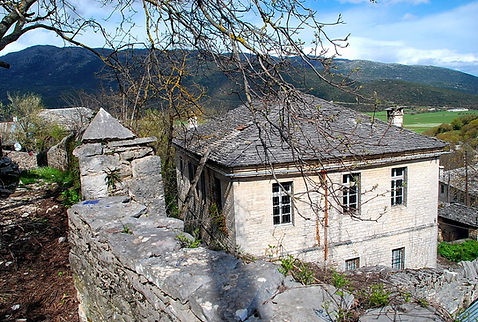
46 stone-made gems
A visit to the villages of Zagori is like a free lesson in architecture. The mostly two-story houses were built by the old craftsmen, with stone and roofed with slate. Following the natural terrain slopes are the well constructed cobbled alleys that meander between the houses, all leading to the central square. There , inhabitants of the community meet at the church, at the coffee shop, or just sit and chat under the large plane trees. The first of the 46 villages to be developed for tourism was Megalo Papigo and Mikro Papigo. A walk from one village to the other is a truly rejuvenating experience.. The villages of Vitsa, Aristi, Kippi and Monodendri have also experienced a moderate growth.

EPIRUS TOUR - VIKOS GORGE
Vikos the divine "cut"
Words can not describe the sensation when visiting Vikos for the first time.It is one of the world's most impressive gorges (the deepest in proportion to its width according to the Guinness Book of Records), a gigantic "cut" splitting Zagori in two. It stretches for Tens of km and has vertiginous cliffs as deep as a 1000 m. The small homonym river flowing through the rare plants and medical herbs, eventually joins other streams to form the Voidomatis river. yet another "star" of the region. Rare animals such as roe deer, bears, wolves and golden eagles find their habitat in the virgin area surrounding the crystal clear river.
From Bridge ti Bridge
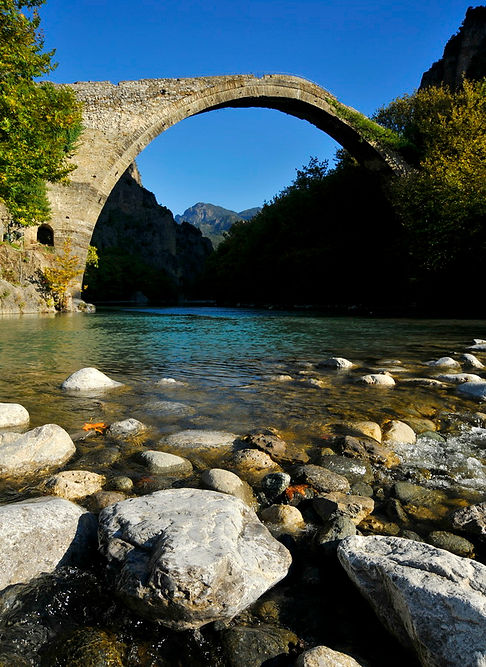
In the 18th c, the inhabitants of Zagori began ti trade and the villages experienced economic growth and were connected to the large European cities. However movement of people and goods was restricted due to the rough terrain and rushing rivers. This was resolved by wealthy merchants who funded the construction of stone bridges. Dozens of bridges - named after their benefactors- which are true works of art blend perfectly with the surroundings. Some of them rounded, others pointed, with one, two and tree arches at their base.
One of the most beautiful is the single- arched bridge Kokori between the villages of Dilofo and Koukouli. Built in the mid 18th c, it has also been used as a set for films and TV series. One can also easily get to the three - arched bridge of Palakida ( 55Km long) built in 1814, very close to Kipi village. Walking around the grassy ridges of many of these monuments, feels you go back in time.

